 BestPriceDeal.in
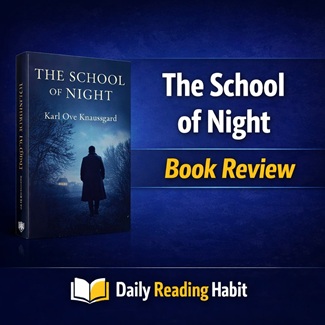
The School of Night by Karl Ove Knausgaard Review: A Deliberately Unlikeable Deal With the Devil
This is not a comfortable book, and it doesn’t want to be. It’s the fourth entry in Knausgaard’s ongoing “Morning Star” series, and it centers on Kristian Hadeland — a character readers of the earlier books already know is dead, since his funeral was described back in the first novel. Here, we get his story from the inside, and it’s not flattering.
What This Book Is Actually About
Kristian is a Norwegian photography student in London in the mid-1980s, seething with ambition and contempt for basically everyone around him — his family back home never understood him, his fellow students bore him, and he’s convinced his art is destined for more than either group can recognize. The book opens with him deciding to end his life, but first, he’s going to write down what happened. That framing — a dead man narrating his own downfall — sets the Faustian tone immediately: this is explicitly Knausgaard’s riff on Christopher Marlowe’s Doctor Faustus, a story about a man of extraordinary ambition making a deal that costs him everything.
The turning point is Hans, an eccentric Dutch artist who makes Kristian’s grandest ambitions suddenly feel achievable — as long as he’s willing to cross lines he probably shouldn’t. The novel is structured across two time periods, 1985-86 and 2009, and builds toward what several reviewers describe as a genuinely dark reckoning: Kristian gets what he wants, and then has to live with how he got it.
Where Critics Genuinely Disagree
This is a book with real, split reception, and it’s worth knowing that going in rather than getting a falsely unified “everyone loved it” picture. On one side: reviewers call it Knausgaard’s most accessible, suspenseful entry in this series, genuinely addictive and hard to put down, with praise for how the dread accumulates. On the other side: some longtime Knausgaard readers consider this among his weakest work, criticizing long stretches of what they call mediocre writing from an intentionally insufferable narrator, and noting the book leans hard on unbroken pages of dense prose with very little dialogue.
Both camps agree on one thing: Kristian himself is meant to be deeply unlikeable — self-important, dismissive of his family, convinced of his own genius. Whether that’s a feature or a flaw seems to depend entirely on your tolerance for spending 500 pages inside an ego that large.
Where I’d Set Expectations
If you’re coming to this expecting a fast-paced thriller, recalibrate: this is literary fiction with thriller elements woven in, not a thriller with literary ambitions. The reward for patience is real — the Faustian structure pays off — but the patience required is also real. Knausgaard’s prose style here, translated by Martin Aitken, is dense and reflective rather than plot-driven for long stretches.
Who Should Actually Read This
- Existing fans of Knausgaard’s “Morning Star” series who want Kristian’s backstory filled in.
- Readers who enjoy literary fiction willing to sit with an unlikeable, self-mythologizing narrator.
- Anyone drawn to modern Faustian bargain stories with real philosophical weight behind them, not just genre trappings.
Who Should Skip It
- If you want fast plotting and frequent dialogue, this will feel slow — long unbroken passages of internal reflection dominate much of the book.
- If you haven’t read the earlier “Morning Star” books, you may find some context assumed rather than explained.
- If an intentionally insufferable narrator is a dealbreaker for you regardless of the payoff, this asks a lot of patience before the reckoning arrives.
Verdict: 3.9/5
A genuinely divisive book, and honestly, that divide seems earned rather than accidental — Knausgaard built a narrator specifically designed to test your patience before rewarding it. This isn’t the place to start with this series or with Knausgaard generally, but for readers already invested, it’s a dark, deliberate piece of the larger puzzle he’s building.