 BestPriceDeal.in
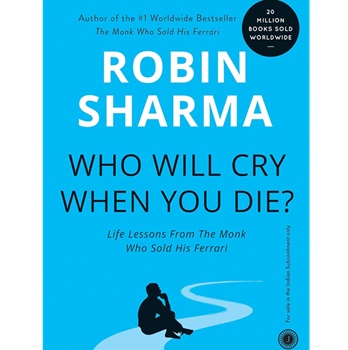
Who Will Cry When You Die? by Robin Sharma Review: The One Line That Actually Stuck With Me
There’s a line early in this book, a Hindi proverb Sharma quotes: “Chita burns the dead body while Chinta burns the living.” Chita is the funeral pyre; Chinta is worry. That’s the whole book in one sentence, really — the argument that anxiety does more damage to you while you’re alive than the thing you’re anxious about ever will. I’ve read a lot of self-help books that build to a big idea over 300 pages. This one just hands it to you on page 20 and spends the rest of the book showing you what to do about it.
What This Actually Is
Published in 1999, this is the third book in Sharma’s “Monk Who Sold His Ferrari” series — not a standalone, though you don’t need to have read the earlier ones to follow it. It’s structured as 101 short chapters, each just 2-4 pages, covering things like “Honor Your Past,” “Start Your Day Well,” and “See Troubles as Blessings.” The final chapter — 101, appropriately — is literally titled “Live Fully So You Can Die Happy,” which is Sharma finally answering the question the title poses.
This format matters more than it sounds like it should: you can genuinely read one chapter a day for over three months and never feel like you’re behind or need to catch up on an argument from ten chapters ago. Each one stands almost entirely alone.
Where It’s Genuinely Good
The best chapters aren’t the ones offering advice — they’re the ones reframing how you think about something you already believed you understood. The “troubles as blessings” chapter isn’t just “stay positive” fluff; Sharma is specifically arguing that the hardest periods of your life are where actual character gets built, and he’s not vague about it — he gives you a way to actually look back at a past difficulty and name what it taught you.
The short-chapter format also means there’s very little padding. Compare that to a lot of modern self-help books that stretch one idea across 250 pages — this one respects that you have 5 minutes, not an afternoon.
Where It Shows Its Age, and Where It’s Repetitive
Being honest: written in 1999, a few of the cultural references and the general tone occasionally feel like a product of pre-social-media self-help — there’s a certain earnestness to it that newer books have gotten more ironic or clinical about. And with 101 short chapters, there’s inevitably some overlap; a handful of lessons essentially restate “be kind” or “stay disciplined” in a new wrapper. If you’re the type of reader who’s already deep into this genre, some of it will feel familiar.
If you want something more current tackling similar “what actually matters” territory, our review of The Way of Excellence by Brad Stulberg covers related ground with 2026-era research and language instead of 1999-era spiritual self-help framing.
Who Should Actually Read This
- Anyone who wants short, standalone daily readings rather than a book you sit and finish in one go.
- Readers who like their self-help with a spiritual/reflective tone rather than a productivity-hack tone.
- People going through a genuinely hard period who want something to reframe it, not just distract from it.
Who Should Skip It
- If you’ve read several Robin Sharma books already, expect real overlap in message and tone.
- If you want research-backed, clinical self-help rather than reflective/spiritual framing, this isn’t that.
Verdict: 4.4/5
Not every one of the 101 lessons lands — a few feel like filler to hit the round number — but the strongest chapters, and that one line about Chita and Chinta, genuinely earned a place in how I think about worry. For a 1999 book, it’s aged better than most of its era’s self-help peers, mostly because it never tried to be trendy in the first place.
Buy Who Will Cry When You Die? here: GET DEAL — ₹182 (was ₹250)